



NACHBIKE R1 and Class 2 E-Bikes: What to Know About Legal Street Riding
An electric bike should fit more than your riding style. It should also fit the rules of the roads you want to use.
If you are exploring the NACHBIKE R1 and searching for a street legal electric bike, understanding Class 2 is a useful place to start. Throttle operation, motor assistance, pedals, and local access rules all matter when planning a ride.
This guide explains what a Class 2 e-bike is, how street legality works, and what R1 shoppers should verify before heading onto public roads.

What Is a Class 2 E-Bike?
A Class 2 e-bike is commonly described as a low-speed, throttle-assisted electric bicycle. Its motor can propel the bicycle without the rider pedaling, and motor assistance cuts off at 20 mph under the Class 2 definition.
That makes a throttle electric bike appealing to riders who want the option of motor-powered starts as well as pedaling.
However, speed is only part of the classification. Applicable rules also address motor power and operable pedals. California, for example, requires fully operable pedals and motor power no greater than 750 watts. A 20 mph setting alone does not establish compliance. California Vehicle Code §312.5

Are Class 2 E-Bikes Street Legal?
A qualifying Class 2 electric bike can be used legally where the applicable rules permit it. The practical question is whether both the bicycle and the planned route meet those rules.
Avoid treating “street legal” as permission to ride on every road, sidewalk, bike path, or trail.
For example, New York State allows qualifying electric-assist bicycles on streets and highways with posted speed limits of 30 mph or less. This illustrates why route planning matters alongside bicycle classification. New York State Department of Transportation
Before riding, check your state and local requirements for:
- Electric bicycle classification and equipment.
- Rider age and helmet use.
- Access to roads, bicycle lanes, sidewalks, and shared paths.
- Posted speed limits and location-specific restrictions.
Knowing these details helps turn a search for a street legal e-bike into a practical riding plan.
Getting to Know the NACHBIKE R1
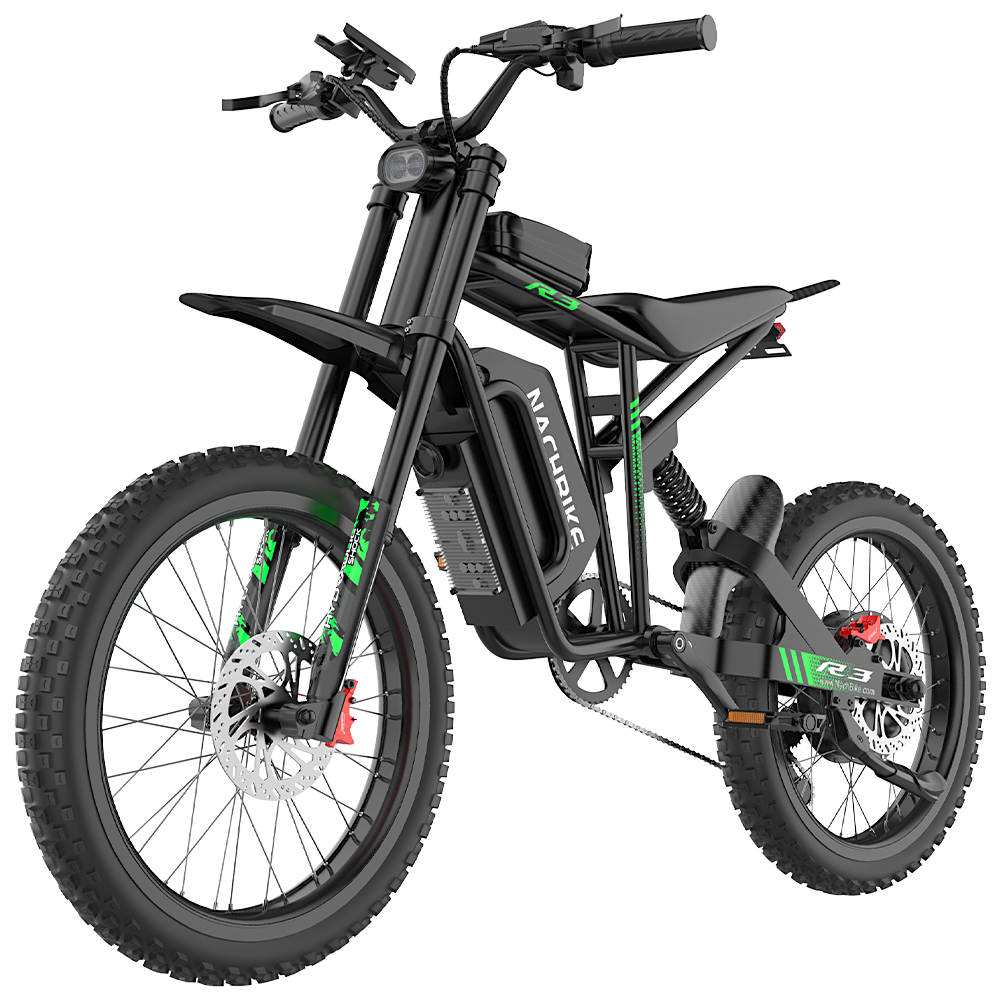
The NACHBIKE R1 electric dirt bike with pedals combines a dirt-bike-inspired appearance with features worth considering for everyday riding.
Its listed equipment includes a thumb throttle, pedals, a removable 60V 25Ah battery with Samsung cells, front and rear suspension, and hydraulic disc brakes.
For shoppers, these features raise useful questions: Does the bike fit your storage space? Can you remove the battery conveniently for charging? Is the riding position comfortable for your intended trips?
Road classification deserves the same attention. The current R1 listing describes the bike as Class 2 but also lists a 1000W nominal motor and 2000W peak output. Those figures require clarification before relying on the Class 2 claim in a jurisdiction with a 750W limit. Confirm the exact version and its documented specifications before purchasing for public-road use.

Why Pedals and Motor Settings Matter
When comparing an electric dirt bike with pedals to other electric vehicles, look beyond appearance.
Pedals should be functional, and the motor’s capabilities must match the applicable vehicle category. A dirt-bike-style frame does not establish road legality, and fitting pedals does not by itself establish Class 2 status.
The same care applies to speed settings. Before changing a controller setting or using an unlocking feature, verify how the change affects the vehicle’s classification. Do not assume that a faster setting automatically makes a bike a compliant Class 3 model.
For the R1, request specifications that match the exact model being delivered, rather than relying on a general category name.
Can You Ride a Class 2 E-Bike on Trails?
Trail access needs its own check.
The National Park Service allows individual park superintendents to determine where e-bikes may be used. A trail open to conventional bicycles is not automatically open to every class of electric bicycle. Check the specific park’s current rules before visiting. National Park Service E-Bike Guidance
For a weekend outing, confirm the route first, then choose equipment and riding settings appropriate to that location.

Frequently Asked Questions About Class 2 Electric Bikes
Does a Class 2 e-bike have a throttle?
Yes. Throttle operation is a defining feature of the Class 2 category, allowing motor propulsion without continuous pedaling.
Is every 20 mph electric bike a Class 2 e-bike?
No. A speed specification alone is insufficient. Motor power, pedals, motor behavior, and applicable legal definitions also matter.
Is the NACHBIKE R1 street legal everywhere?
A nationwide guarantee is not supported by the current product information. Verify the delivered R1’s specifications and the requirements in the location where you intend to ride.
Where can I find the R1’s specifications?
Visit the NACHBIKE R1 product page to review the listed equipment. Before buying for road use, ask NACHBIKE to confirm the motor specifications and classification of the exact version you will receive.
Start Your R1 Journey With the Right Information
Choosing an electric bike is easier when your intended route, preferred features, and local requirements are clear.
Explore the NACHBIKE R1, compare its equipment with your everyday needs, and verify its classification for your location. An informed choice is the first step toward confident, lawful riding.


Leave a comment